
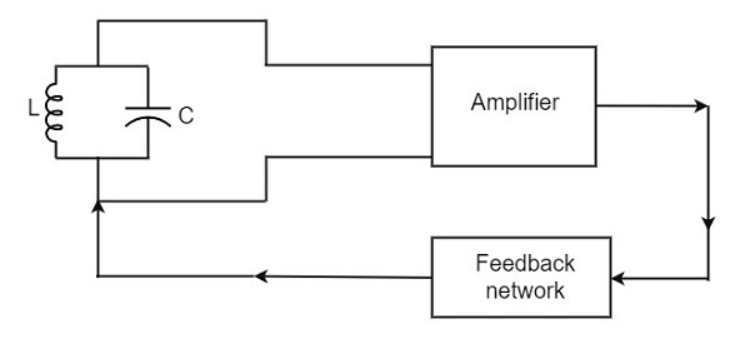
从最基本层面来看,振荡器电路需要由一个谐振电路、一个晶体管放大器和一个反馈电路组成。
1、Tank Circuit 谐振电路
The tank circuit consists of an inductance L connected in parallel with capacitor C. The values of these two components determine the frequency of the oscillator circuit and hence this is called as Frequency determining circuit.
谐振电路由与电容器C并联的电感L组成。这两个分量的值决定了振荡器电路的频率,因此这被称为频率确定电路。
注:
由电感和电容并联的电路在英文中称为Tank circuit,翻译成中文叫“槽路”;现在改成“ 振荡电路 ”或“ 振荡回路 ”
2、Transistor Amplifier 晶体管放大器
The output of the tank circuit is connected to the amplifier circuit so that the oscillations produced by the tank circuit are amplified here. Hence the output of these oscillations are increased by the amplifier.
谐振电路的输出连接到放大器电路,以便谐振电路产生的振荡在这里被放大。因此,这些振荡的输出由放大器放大。
3、Feedback Circuit 反馈电路
The function of feedback circuit is to transfer a part of the output energy to LC circuit in proper phase. This feedback is positive in oscillators while negative in amplifiers.
反馈电路的功能是将部分输出能量以适当的相位传输到LC电路。该反馈在振荡器中为正,而在放大器中为负。
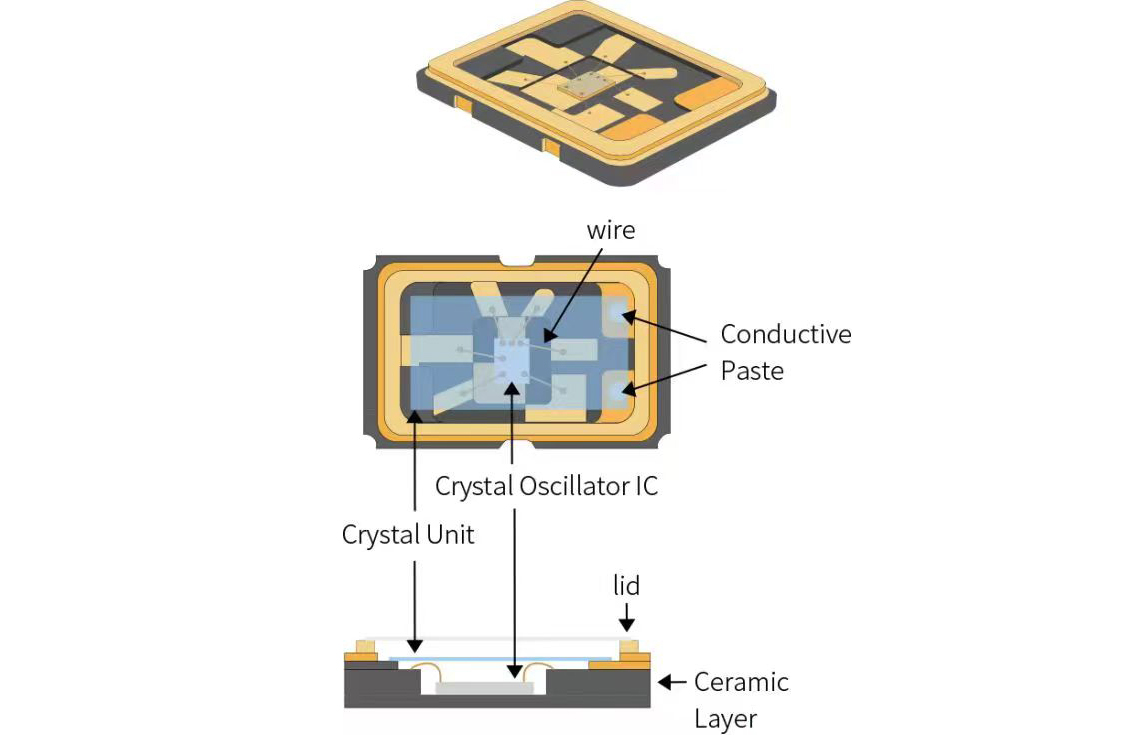
附:石英晶体振荡器内部结构图
晶振的工作原理是什么?
晶振具有压电效应,即在晶片两极外加电压后晶体会产生变形,反过来如外力使晶片变形,则两极上金属片又会产生电压。如果给晶片加上适当的交变电压,晶片就会产生谐振(谐振频率与石英斜面倾角等有关系,且频率一定)。晶振利用一种能把电能和机械能相互转化的晶体,在共振的状态下工作可以提供稳定、精确的单频振荡。在通常工作条件下,普通的晶振频率绝对精度可达10ppm。利用该特性,晶振可以提供较稳定的脉冲,广泛应用于微芯片的时钟电路里。晶片多为石英半导体材料,外壳用金属封装。
晶振常与主板、蓝牙、声卡等电路连接使用。晶振常被称作芯片的“心脏”,如果主卡的“心脏”出现问题,必定会使其他各电路出现故障。