

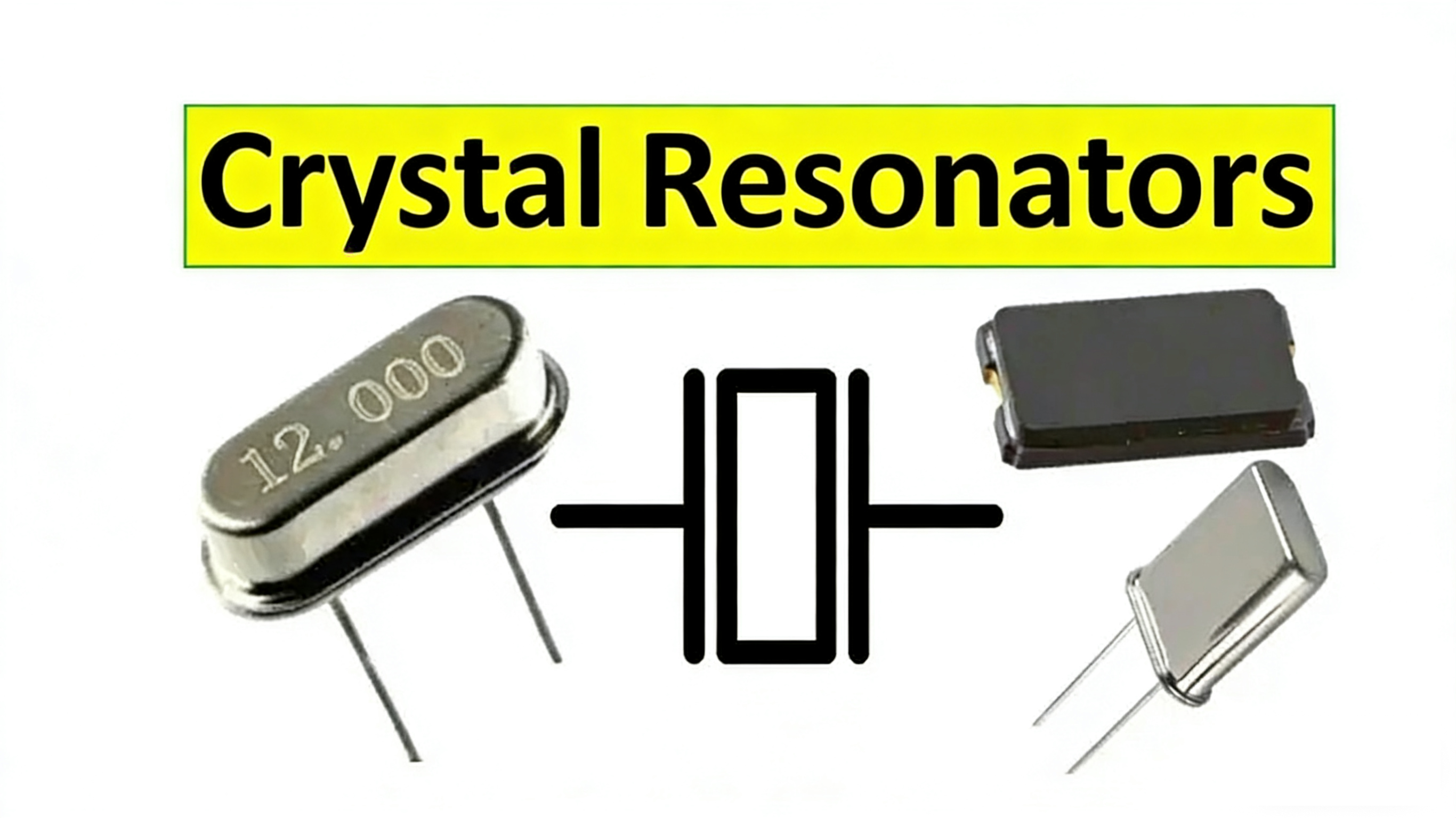
What is a Crystal Resonator?
A quartz crystal resonator is a device that uses the natural vibrational frequency of a piece of quartz crystal to accurately control the frequency of an electronic circuit. The crystal is cut and shaped in such a way that when an electrical current is applied to it, the crystal vibrates at a very specific frequency. This frequency is known as the resonant frequency of the crystal.
The crystal resonator works by exploiting the piezoelectric effect, which is the ability of certain materials (such as quartz) to generate an electrical charge when they are mechanically deformed. When an electrical current is applied to the electrodes on a quartz crystal, it causes the crystal to vibrate at its resonant frequency. This vibration generates an alternating current in the electrodes, which can be used to control the frequency of an electronic circuit.
Quartz crystal resonators are used in a wide range of electronic devices, including radios, televisions, computers, and clocks. They are particularly useful in applications that require high-precision frequency control, such as in telecommunications, navigation, and scientific research.
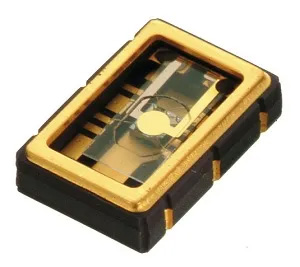
Quartz crystal resonators are also widely used in oscillators, which are electronic circuits that generate a steady, repeating waveform. They are also used in filters, which are circuits that allow certain frequencies to pass through while blocking others.
Overall, Quartz crystal resonator is a very precise and stable frequency control device that are widely used in electronic and communication technology.
What is an Overtone?
In a crystal resonator, overtones refer to the additional frequencies that are present in the vibrational pattern of the crystal, in addition to the primary resonant frequency. These additional frequencies are known as overtone frequencies and are typically at higher frequencies than the primary resonant frequency.
The overtone frequencies are related to the primary resonant frequency by a whole number ratio, such as 2:1, 3:1, 4:1, etc. For example, if the primary resonant frequency of a crystal is 10 MHz, the first overtone frequency would be 20 MHz (2:1 ratio), the second overtone frequency would be 30 MHz (3:1 ratio), and so on.
The existence of overtones in a crystal resonator is a result of the crystal’s physical properties and the way it is cut and shaped. The overtones are caused by the vibrations of the crystal at different points along its length, which results in multiple vibration modes or resonant frequencies.
In practical applications, the primary resonant frequency is often used for frequency control, but the overtones can also be used, depending on the specific requirements of the circuit or device. For example, in some cases, the overtones may be used for filtering or as a reference frequency for a frequency synthesizer.
Overall, overtones are additional frequencies present in the vibration of crystal resonator in addition to the primary resonant frequency, and they are related to the primary frequency by a whole number ratio.
Crystal resonators are used in a wide range of electronic devices because they offer several advantages over other types of frequency control devices, such as:
High precision: Quartz crystal resonators are highly stable and accurate, with a precision of up to parts per billion. This makes them ideal for use in applications that require precise frequency control, such as telecommunications, navigation, and scientific research.
Wide frequency range: Crystal resonators can be made to oscillate over a wide frequency range, from a few kilohertz to several hundred megahertz.
Low aging: Crystal resonators have low aging, meaning the frequency does not drift significantly over time. This makes them suitable for long-term, continuous operation.
Low power consumption: Crystal resonators consume very little power and can run for a long time on a small battery.
Reliability: Crystal resonators are robust and reliable, with a long lifespan.
The load capacitance of a crystal resonator is the capacitance that is added to the crystal in order to make it oscillate at its desired frequency. The load capacitance is usually added in parallel to the crystal, and it is chosen so that the total capacitance, including the crystal’s own capacitance and the load capacitance, matches the resonant frequency of the crystal.
The load capacitance of a crystal can be calculated using the following formula:
Load Capacitance (pF) = 1 / (4π² x frequency² x motional capacitance)
Where:
frequency is the desired resonant frequency of the crystal in MHz
motional capacitance is the crystal’s own capacitance in picofarads (pF)
It’s important to note that the formula above assumes that the crystal is loaded in parallel and it’s only for a rough estimate, the actual load capacitance can vary depending on the crystal and the circuit.
The load capacitance can also be measured using an LCR meter or an impedance analyzer. The measurement can be done either in series or parallel with the crystal, but parallel measurement is more common. The load capacitance value is typically measured at the crystal’s resonant frequency and is usually in the range of a few tens of picofarads to a few
hundred picofarads.
In practice, different crystals may require different load capacitances to oscillate at the desired frequency, and the load capacitance may also be affected by the environment in which the crystal is operating, such as temperature and pressure variations. It’s important to choose the right load capacitance and to measure it in the final application environment.
Overall, the load capacitance is the capacitance that is added to the crystal in parallel to make it oscillate at its desired frequency. It can be calculated using a formula and measured using an LCR meter or impedance analyzer. The load capacitance value is typically measured at the crystal’s resonant frequency and it can be affected by the environment in which the crystal is operating.
High Q factor: The Q factor of a crystal resonator is a measure of its quality factor, which is a measure of the energy stored in the oscillating system compared to the energy lost per oscillation. Crystals have high Q factor, which means that they are able to oscillate with a high degree of stability and very low loss of energy.
Overall, crystal resonators are widely used in electronic devices and communication technology due to their high precision, wide frequency range, low aging, low power consumption, reliability and high Q factor.
The Q factor, also known as the quality factor, is a measure of the energy stored in an oscillating system compared to the energy lost per oscillation. In the case of a crystal resonator, the Q factor refers to the quality of the crystal’s oscillation, which is directly related to the crystal’s precision and stability.
A high Q factor means that the crystal is able to oscillate with a high degree of stability and very low loss of energy. This results in a more precise and stable oscillation, which is desirable in applications such as frequency control and filtering. Quartz crystals typically have high Q factors, typically in the range of several thousand to several hundred thousand.
The Q factor of a crystal resonator can be affected by various factors, such as the crystal’s physical properties, the way it is cut and shaped, and the environment in which it operates. For example, the Q factor may decrease due to the presence of temperature or pressure variations, or due to the aging of the crystal.
In practical applications, the Q factor of a crystal resonator is an important parameter that must be considered when selecting a crystal for a specific application. A high Q factor is typically desirable in applications that require high precision and stability, while a lower Q factor may be acceptable in applications where a lower level of precision is sufficient.
Overall, Q factor is a measure of the energy stored in an oscillating system compared to the energy lost per oscillation, and it is a measure of the quality of the crystal’s oscillation. A high Q factor means a more precise and stable oscillation, and it is desirable in frequency control and filtering application.