

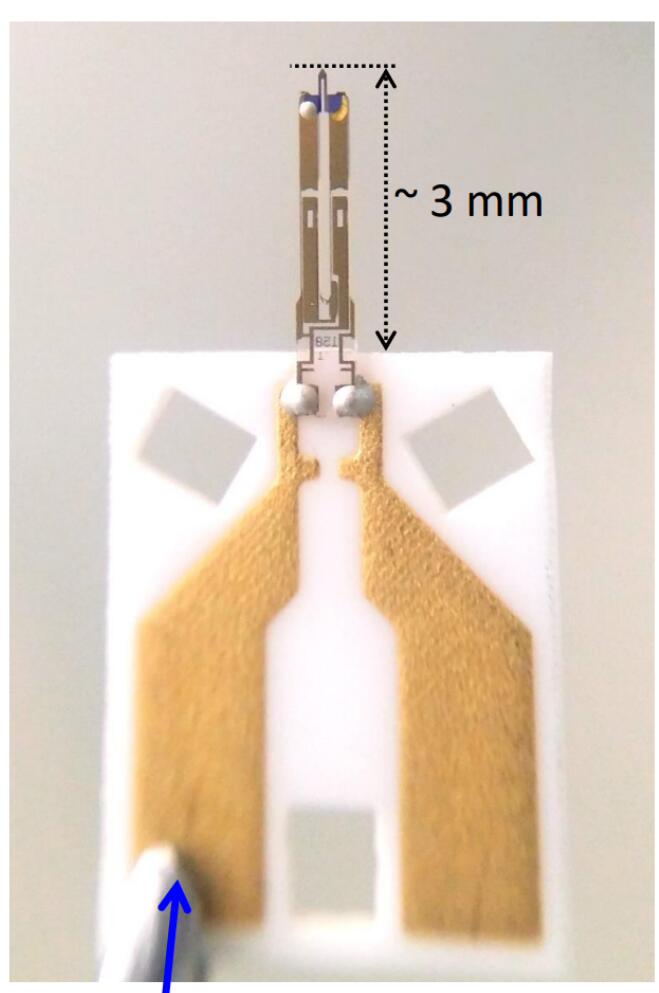
温度特性概述
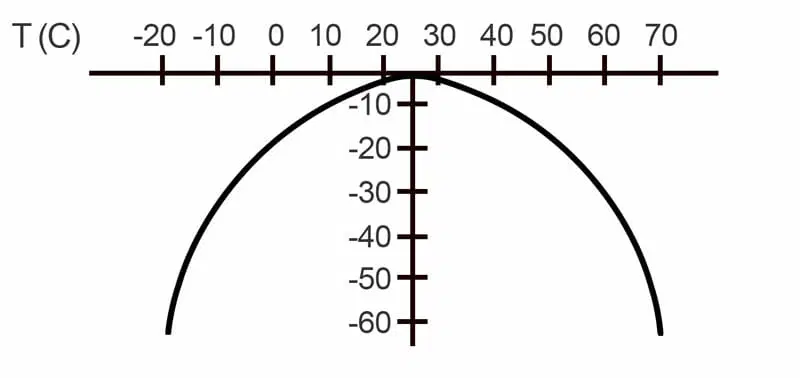
音叉晶振(如32.768kHz RTC晶振)的频率稳定性受温度影响显著,以25℃为中心点,温度升高或降低均会导致频率下降,形成负二次方抛物线的温度曲线。频率偏差与温度偏离呈平方关系增长,即偏离25℃越多,频率漂移越大。
温度系数与温漂量化
 常见XY-cut音叉晶振的温度系数约为-0.035 ppm/℃²。
贴片型音叉晶振温度系数约为-0.04 ppm/℃²。
在-10℃至60℃范围内,典型温漂可达-49 ppm。如下图所示:
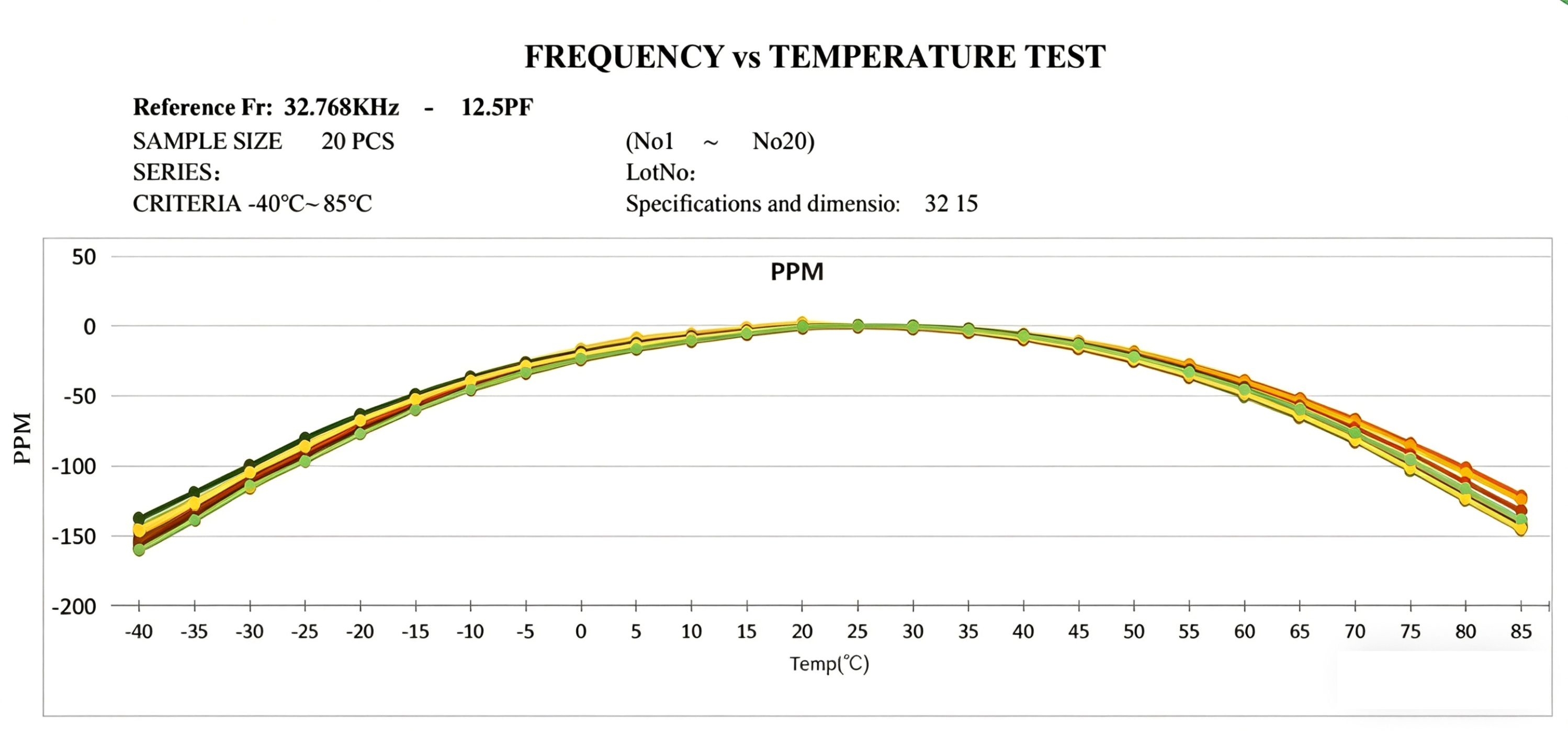
工业级温度范围(-40℃至85℃)下温漂可高达-151 ppm,对应计时误差可能从每年约10分钟增加到1.3小时。 如下图所示:
不同切型(如NT-cut)可优化温漂,但音叉结构本身对宽温适应性有限。
温度补偿与应用
为了减少温度影响,可采取以下措施:
1、温度补偿晶振(TCXO):通过电路补偿温度引起的频率漂移。
2、选择温漂更小的切型:如AT-cut分频实现32.768kHz,可在宽温范围内获得更稳定频率。
应用限制:
音叉晶振因固有结构特性,在极宽温场景下应用受限,适合低功耗、精度要求中等的RTC或手表等设备。
拓展阅读:Parabolic Coefficient(抛物线系数)
Quartz crystal tuning forks, or watch crystals, are one of the oldest quartz crystal designs. Originally used for time keeping in watches and clocks, tuning forks are now also used in modern electronics, like computers, as real time clocks (RTC). There are hundreds of millions of these uniquely shaped quartz crystals being manufactured by global suppliers each year.
Tuning fork crystals are available in a variety of sizes to meet the needs of designs with trends pointing to smaller surface mount crystal packages every year.
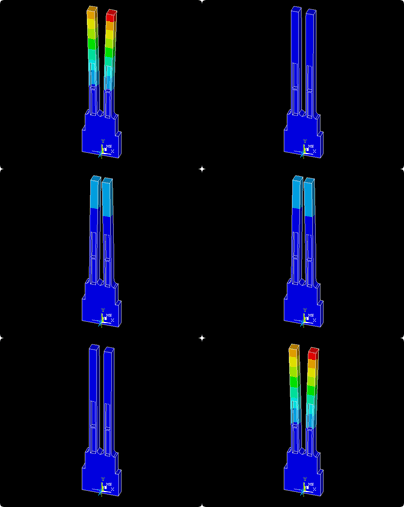
Quartz crystals were named tuning forks because the design of the crystal plate, also known as a wafer or blank, resembled the shape of a musical tuning fork. The working principle being similar; The two tangs will vibrate at a certain frequency. The frequency of the tuning fork is defined by the mass and dimension of the tuning fork tangs including the length, width, and height.
The parabolic coefficient often refers to a value that describes the curvature of a parabolic relationship, such as the temperature response of tuning fork crystals, typically expressed in parts per million per degree Celsius squared (ppm/°C²).
In the context of crystal oscillators, the parabolic coefficient quantifies how the frequency of a crystal changes with temperature. This relationship is often modeled as a parabolic curve, where the frequency deviation from a nominal value can be expressed as a function of temperature. The coefficient indicates how sensitive the frequency is to changes in temperature, which is crucial for applications requiring precise timing and frequency stability.
A common parabolic coefficient for a 32.768 kHz tuning fork crystal is 0.04 ppm/°C². This means that for every degree Celsius change in temperature, the frequency deviation will change by 0.04 ppm times ℃ squared.
The parabolic nature of the frequency response indicates that the frequency reaches a maximum at a specific temperature (often referred to as the turnover temperature) and decreases as the temperature moves away from this point.
Applications
Understanding the parabolic coefficient is essential in designing circuits that utilize crystal oscillators, especially in environments with varying temperatures. By compensating for these changes, engineers can ensure that devices maintain accurate timing and performance across a range of operating conditions.
In summary, the parabolic coefficient is a critical parameter in the field of electronics and materials science, particularly in applications involving temperature-sensitive components like crystal oscillators.
About Thru Hole Crystals
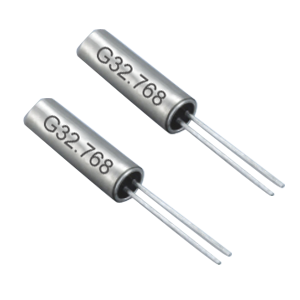
Thru hole crystals are the second most common type of tuning fork crystal to a standard surface mount crystal. Thru hole crystals are hermetically sealed so the temperature performance of a thru hole crystal will be comparable to a standard 32.768 kHz tuning fork crystal. The primary difference between the two not being in performance, but that thru hole crystals need to be hand-placed on the printed circuit board which increases manufacturing time.